WHAT IS PERI-IMPLANTITIS?
Peri-implantitis is a condition characterized by inflammation and infection of the tissues surrounding a dental implant. It is similar to gum disease but specifically affects the area around dental implants. Peri-implantitis can lead to the loss of bone around the implant and, if left untreated, may result in implant failure. Early detection and treatment are essential to prevent long-term complications.
CAUSES OF PERI-IMPLANTITIS
Peri-implantitis typically occurs when bacteria build up around a dental implant, leading to infection and inflammation. Several factors contribute to the development of peri-implantitis, including:
POOR ORAL HYGIENE
Insufficient brushing and flossing around the implant can allow plaque and bacteria to accumulate, causing infection.
SMOKING
Smoking can reduce blood flow to the gums, impair healing, and increase the risk of infection.
EXCESSIVE FORCE ON THE IMPLANT
Teeth grinding or clenching (bruxism) can put excessive pressure on implants, contributing to inflammation and bone loss.
UNCONTROLLED DIABETES
Poorly controlled diabetes can affect healing and increase the risk of infection.
PREVIOUS GUM DISEASE
Individuals with a history of gum disease are at a higher risk of developing peri-implantitis.
IMPLANT DESIGN OR PLACEMENT ISSUES
Poorly placed implants or implants with rough surfaces may provide spaces for bacteria to thrive.
SYMPTOMS OF PERI-IMPLANTITIS
In the early stages, peri-implantitis may not cause noticeable symptoms, but as the condition progresses, the following signs may develop:
RED, SWOLLEN, OR BLEEDING GUMS
Inflammation around the implant site, particularly when brushing or flossing.
PAIN OR DISCOMFORT
Pain around the implant area, especially when chewing or applying pressure.
BAD BREATH
Persistent foul odor or a bad taste in the mouth caused by infection.
LOOSE IMPLANT
The implant may become loose if the surrounding bone is affected by infection.
RECEDING GUMS
Gums around the implant may begin to pull away from the tooth, exposing more of the implant.
BONE LOSS
Loss of bone around the implant, which may be detectable on X-rays.
If you notice any of these symptoms, it is important to seek prompt dental care to prevent further damage to the implant and surrounding tissues.
DIAGNOSIS OF PERI-IMPLANTITIS
To diagnose peri-implantitis, your dentist or periodontist will perform a thorough examination, which may include:
CLINICAL EXAMINATION: Checking for signs of inflammation, bleeding, and gum recession around the implant.
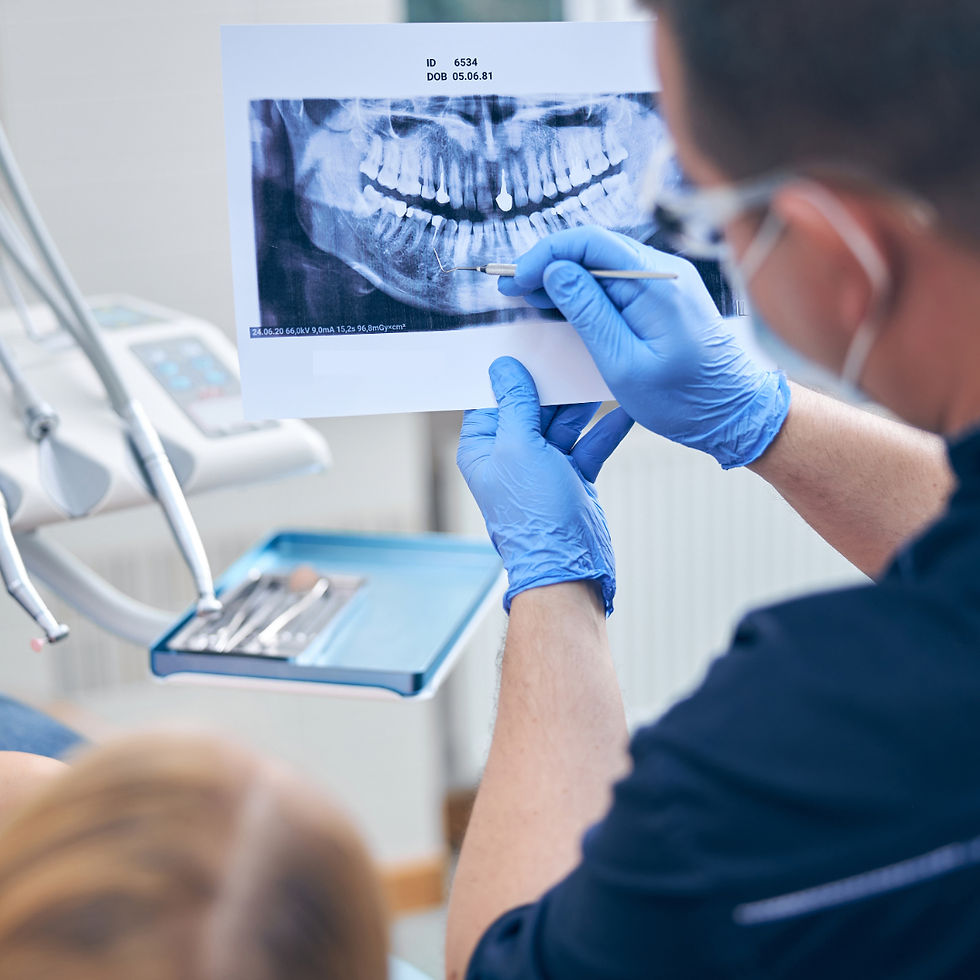
X-RAYS: Dental X-rays will be used to assess the amount of bone loss around the implant.
PROBING: Gentle probing of the area around the implant to measure pocket depths and detect any abnormalities.
In some cases, further tests may be required to determine the extent of the infection and damage.
TREATMENT OF PERI-IMPLANTITIS
Treatment for peri-implantitis depends on the severity of the condition. The goal is to control the infection, reduce inflammation, and restore the health of the tissues and bone around the implant.
DEEP CLEANING
The dentist will clean the implant surface and surrounding tissue to remove bacteria, plaque, and tartar. This may involve scaling and root planing, similar to the cleaning procedures for gum disease.
ANTIBIOTICS
Antibiotic treatments, either in the form of oral medications or local application around the implant, may help control the infection.
SURGICAL TREATMENT
If non-surgical treatments are not successful or if the infection has caused significant bone loss, surgery may be necessary:
FLAP SURGERY: A small incision is made in the gum to access the implant and remove infected tissue. The implant surface is then cleaned, and the gum is sutured back into place.
BONE GRAFTING: If significant bone loss has occurred, bone grafts may be used to help regenerate the lost bone around the implant.
After surgery, your dentist will monitor the healing process and may recommend additional treatments.
PREVENTING PERI-IMPLANTITIS
Prevention is key to avoiding peri-implantitis and maintaining the longevity of your dental implants. Here are some tips to help protect your implants:
PRACTICE GOOD ORAL HYGIENE
Brush your teeth and implants at least twice a day using a soft-bristled toothbrush. Use floss or interdental brushes to clean between your implants and natural teeth.
REGULAR DENTAL CHECKUPS
Visit your dentist regularly for checkups and professional cleanings to ensure your implants are healthy.
QUIT SMOKING
Smoking can significantly increase the risk of peri-implantitis, so quitting can improve your oral and overall health.
AVOID EXCESSIVE FORCE
If you grind or clench your teeth, talk to your dentist about wearing a night-guard to protect your implants.
MAINTAIN A HEALTHY DIET
Eating a balanced diet rich in vitamins and minerals supports gum and bone health.
FAQs
CAN PERI-IMPLANTITIS BE PREVENTED?
Yes, peri-implantitis can often be prevented with good oral hygiene, regular dental visits, and lifestyle changes such as quitting smoking.
HOW CAN I TELL IF MY DENTAL IMPLANT IS INFECTED?
Signs of infection around an implant include redness, swelling, pain, bleeding gums, bad breath, and bone loss. If you notice any of these symptoms, contact your dentist immediately.
CAN PERI-IMPLANTITIS BE TREATED WITHOUT SURGERY?
Mild cases of peri-implantitis may be treatable with deep cleaning, antibiotics, and improved oral hygiene. Severe cases may require surgery.
WILL MY IMPLANT NEED TO BE REMOVED?
With early detection and treatment, most implants can be saved. However, in advanced cases of peri-implantitis where significant bone loss has occurred, the implant may need to be removed.